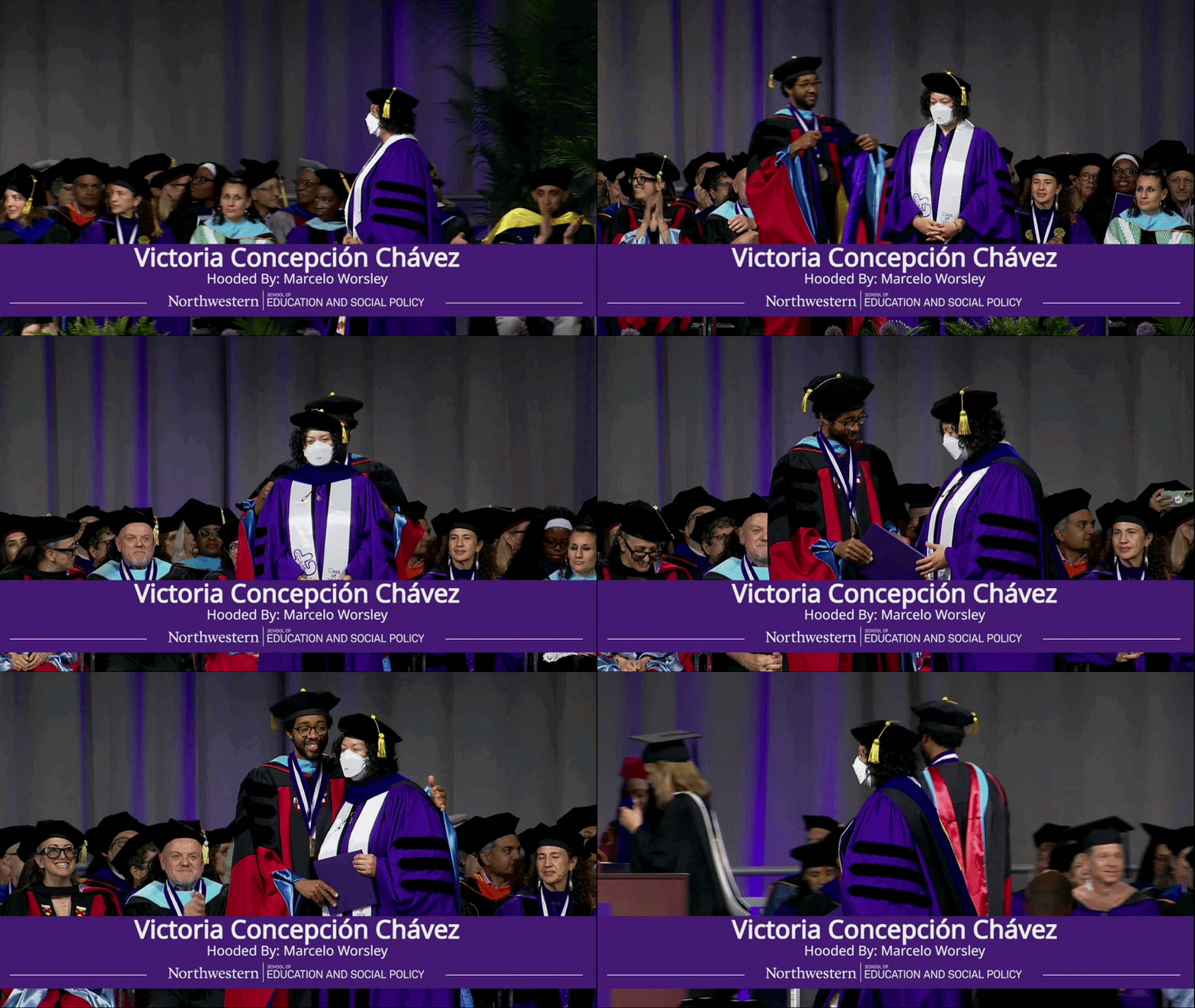
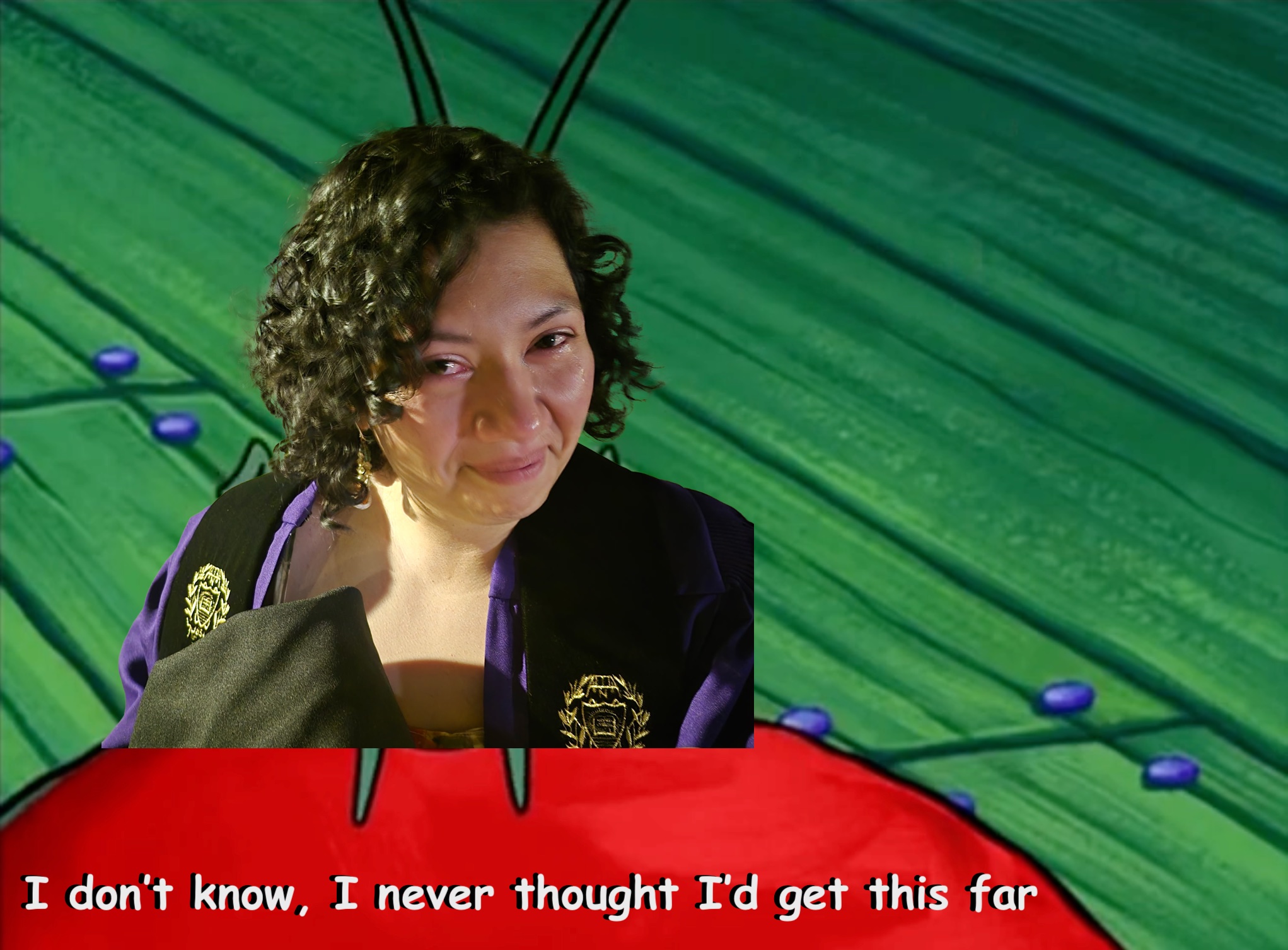
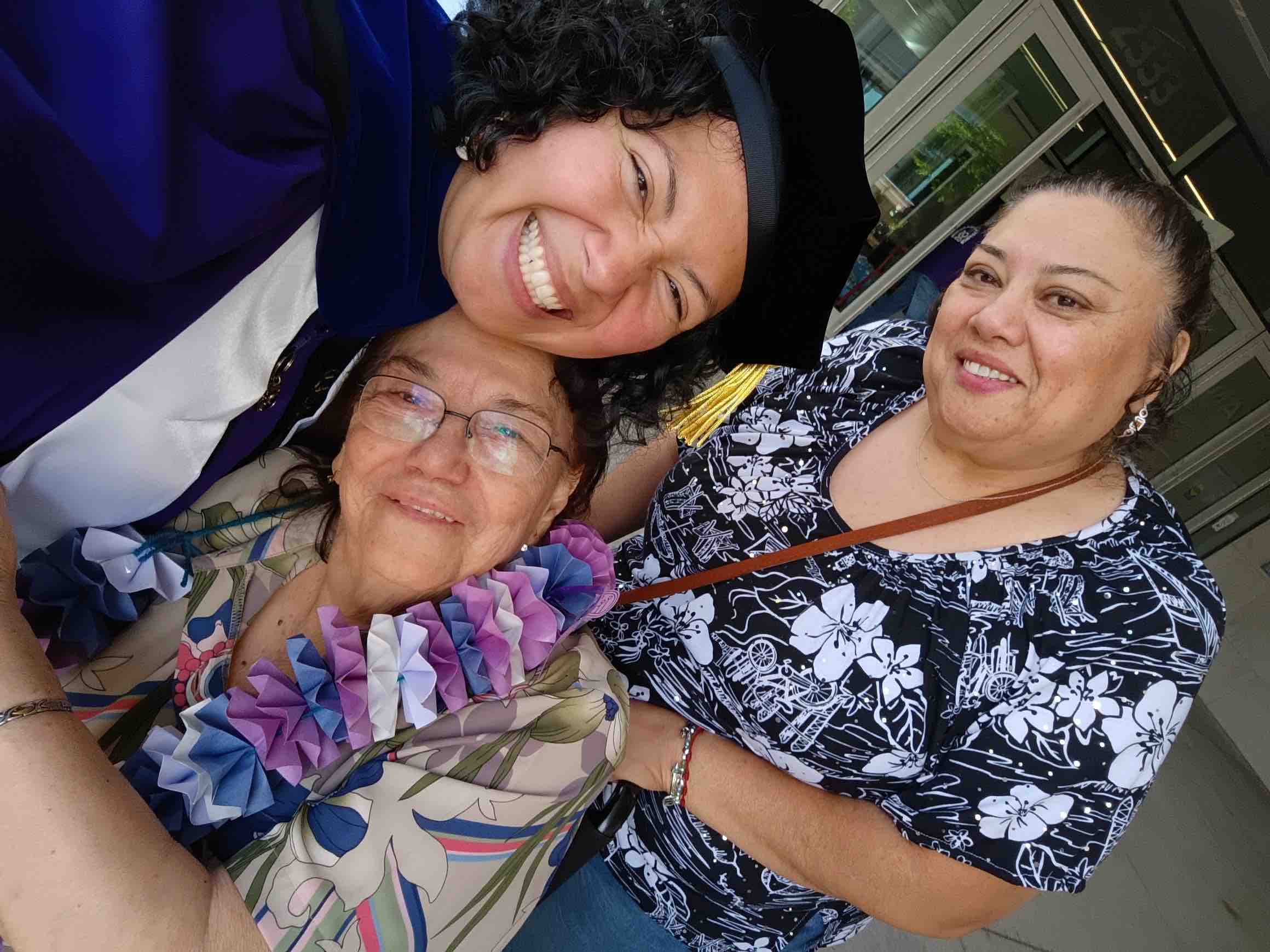
I DID IT, Y’ALL, I FINISHED MY PH.D.!!!
I truly do not have the words to describe the feeling of being done. In earnest, it still feels surreal. I am so incredibly grateful to everyone who’s supported me along the way— I’ve been so blessed to have a wonderful village of friends, mentors, and chosen fam that helped get me here. After writing a whole dissertation, I feel like I’ve exhausted my capacity to words for a while, but I’m including the excerpt of the acknowledgements from my dissertation below. I’m also sharing the recording of my defense as well as the Open Access copy of my dissertation— it’d be an honor to have you watch/read/share/learn from/extend my work!
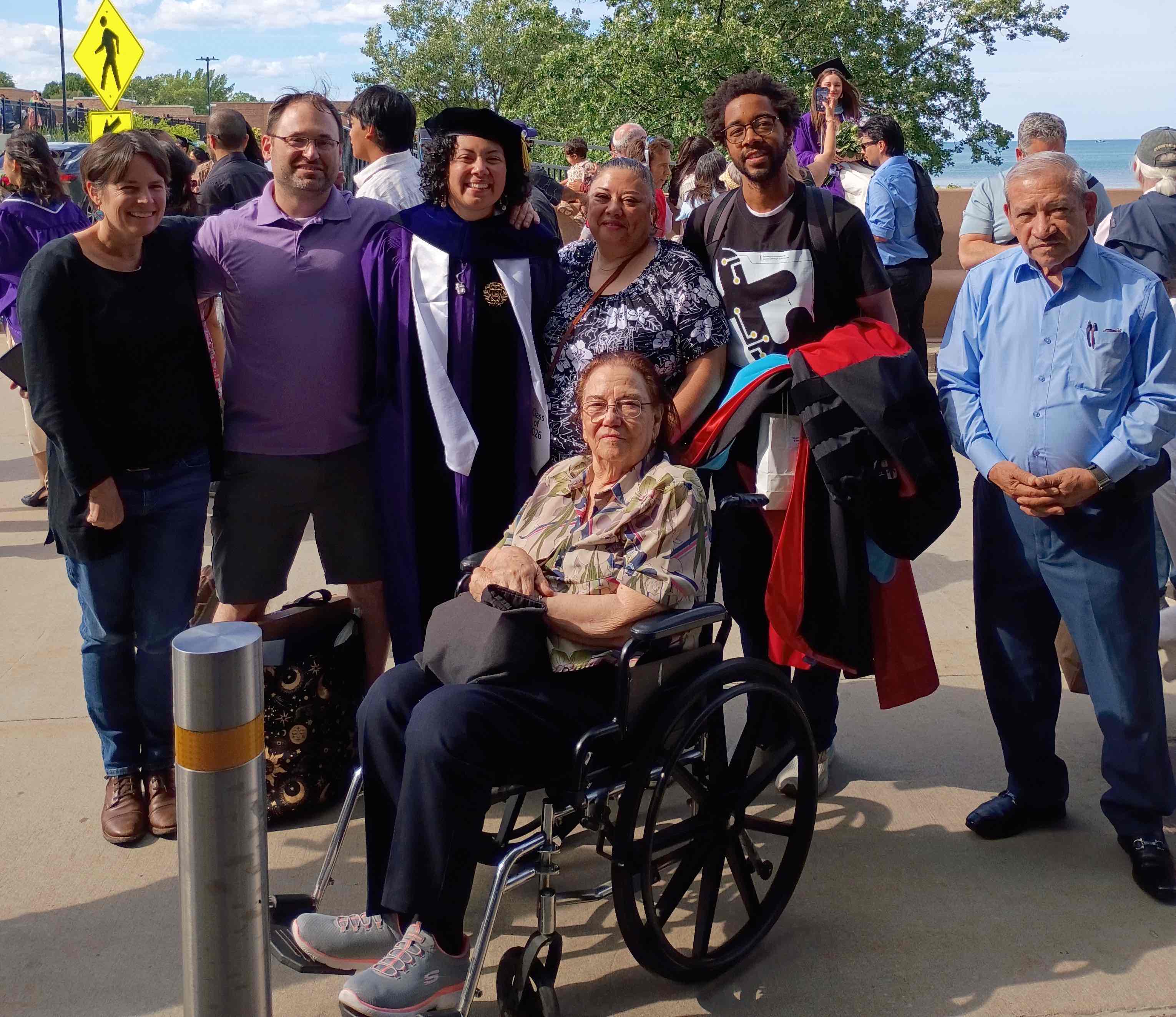
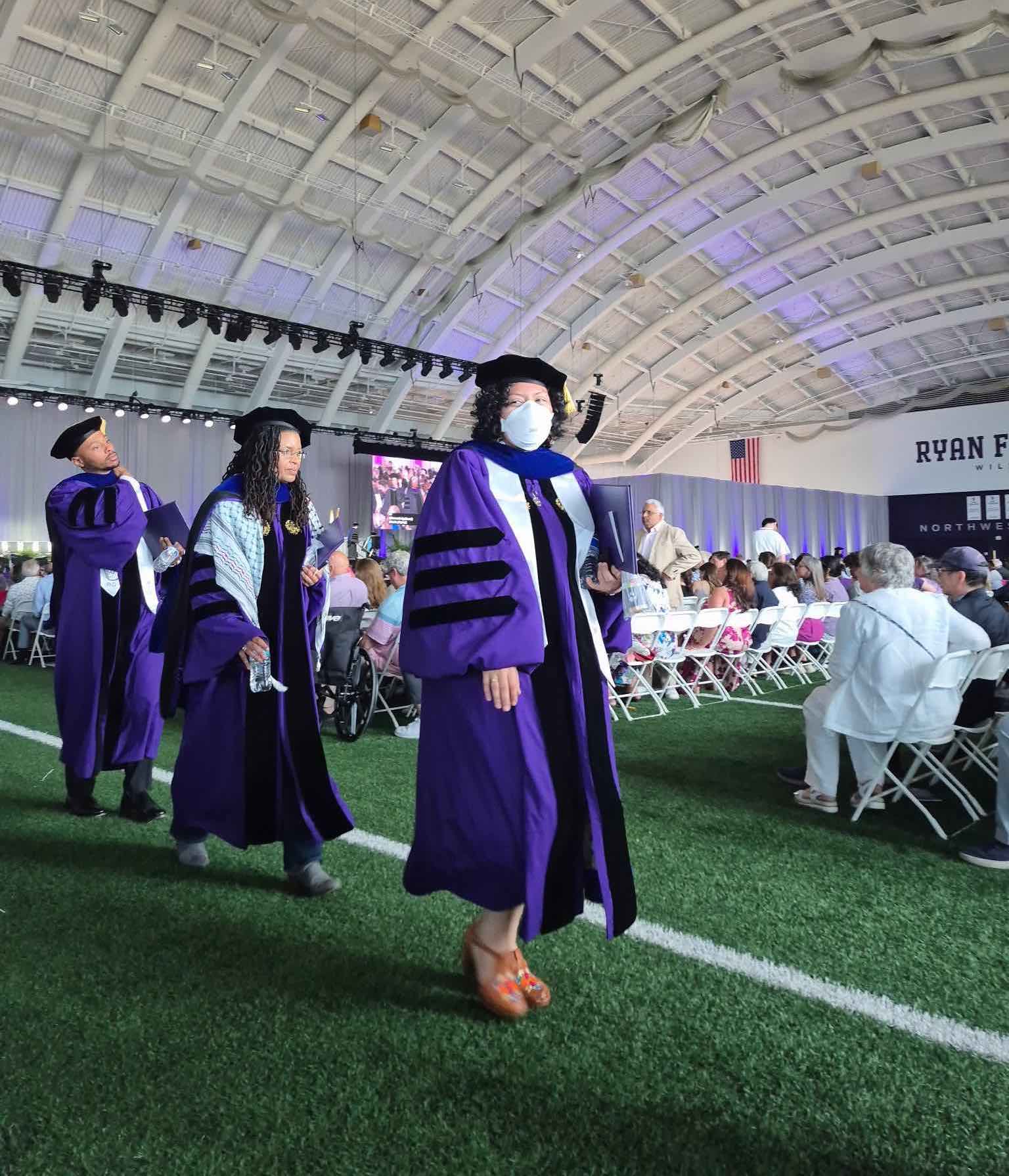
Also, anyone who knows me probably knows this already, but given the state of society nowadays, I’d be remiss if I didn’t explicitly that my entire dissertation, defense, (and the entirety of my graduate work overall) is 100% AI-free! I proudly did all my ish meself, even the tedious things (masochist? uncompromising? luddite? all of the above?).
Acknowledgements
The continued support, care, and love of so many wonderful people made it possible for me to make it to this point, and I do not have the words or space to properly thank every single one of them in the way they deserve. However, I will try my best, knowing my words are bound to fall short of the depths of my gratitude. First and foremost, I would like to name and thank my committee: Drs. Marcelo Worsley, Moya Bailey, Rua Williams, and Bryan Dewsbury, whose guidance and wisdom helped craft this dissertation. I’d like to express additional gratitude to Marcelo, who began supporting me and my scholarship before I even joined Northwestern, fulfilled the role of my first-year advisor despite not having the title, became my official advisor, helped me fight our departments’ ableist policies, chaired this dissertation committee, and always made room for me in every way; thank you for being a safety net for so many of us! Thank you to TIILT and The Digital Apothecary for being my safe spaces and virtual homes while at Northwestern, and to Labs for Liberation for teaching me what community and care can feel like. Thank you to Moya for making so much of that possible, for holding space for me and all of us in both labs, for showing me other (better) worlds are possible and what those worlds might look/feel/sound/be like, for helping me unpack so much of my internalized ableism and capitalism, and for always inspiring me to be a kinder, gentler, and more mindful version of myself. Thank you to Natalie for similarly inspiring me to be more joyful and to find the goodness in human-kind, and to them and DJ for being my (program) elders, role models, and friends.
Thank you to every professor who let me join or TA their classes remotely, especially those who didn’t make it feel like a burden or favor. Thank you to Sarah Van Wart for being an incredible research collaborator, mentor, and friend— you carried me over the 2YP finish line and your passion, pep talks, and kind words have helped me crawl out of many spirals. Thank you to all of my friends and peers who have inspired me, been my accountabili-buddies, let me vent, vented to me, and reminded me to be a whole person and not just an academic: to Alexis, Lydia, and Bradley for making writing sessions fun; to Alejandra for always showing me academic writing can be beautiful; to Natalie for all the Ted Lasso and for generally being an incredible friend; to Alexis, whose invaluable feedback and support brought life anew to my defense presentation; to everyone in Critical Contexts for being wonderful and inspiring peers; to all my StillCoviding/CovidCautious friends for taking community care seriously and enabling me to have both safety and community; to Desirée and Sarah for their continued friendship and inspiring non- academic pursuits; to my wonderful therapists: Keila, Caress, and Sulwa, for helping me cope and grow over the last five years; and to everyone I haven’t named but whose impact I still feel. Thank you to all the educators who’ve supported and inspired me throughout my lifetime, with special gratitude to Mr. Prince, Mr. Yanek, and Dr. Villarreal, for all being the kinds of educators I aspire to be. Thank you to all the amazing troublemakers and boat-rockers who’ve boldly fought against injustices— folks like Dr. Washington, Shana, and The Papayas have paved the way for scholars like me. Last but absolutely not least, thank you to Matt, whose love and lasagnas have kept me alive in more ways than one, and whose face always gave me the serotonin I needed to keep typing; thank you for being a daily reminder that there is good and kindness in the world, for being my ray of sunshine, my rock, and my safety; thank you and the boys for being a part of my life and for adapting to all the changes and challenges that have come along the way; I love you all more than words can say.
Abstract
Equity-aligned efforts have been crucial to helping address current and historic injustices across policies, systems, and institutions in the U.S. At the same time, some of these efforts have resulted in little to no progress, and anything relating to equity has recently become a target for dismantlement. Within this dissertation, I argue that good intentions alone are not enough when it comes to equity— and that poor implementations of well-intentioned efforts may in fact hinder our progress towards equity. Specifically, I analyze an NSF-based effort within computing. Within computing, the homogeneity in the demographics of the field has long been a topic of concern, especially in academia. As such, efforts to ‘broaden participation’ in computing (BPC) have sought to reduce disparities across populations considered ‘underrepresented’ in the field of computer science (CS). One of these efforts came from the National Science Foundation (NSF), who in 2017 began requiring investigators to include two-page documents or ‘plans’ outlining how their departments were working towards BPC. Drawing on the scholarship of Drs. Moya Bailey, Talila A. Lewis, and Sami Schalk, I use ableism as a lens through which to analyze 128 publicly (at the time) available BPC Plans and answer the following questions:
RQ 1) How do departments conceptualize accessibility and disability within efforts to broaden participation in computing?
RQ 2) In what ways are departments’ efforts to ‘broaden participation in computing’ disabling? In what ways are they enabling?
I find that, despite people with disabilities being one of the ‘underrepresented’ demographics in computing, most plans fail to include us or pay attention to accessibility. Additionally, despite the good intentions of departments, many of the efforts they describe reinforce ableist values and beliefs, and as such, may be counterproductive and cause more harm than good with regard to broadening participation. Importantly, most plans fail to consider or address the systemic forces impacting the continued exclusion of minoritized populations, which I argue is not only a hindrance to their success but also a contributor to the ease with which they have been dismantled amidst administration changes.
Watch my defense
Read my diss
My full dissertation is available for download, for free, through Northwestern’s Archive.